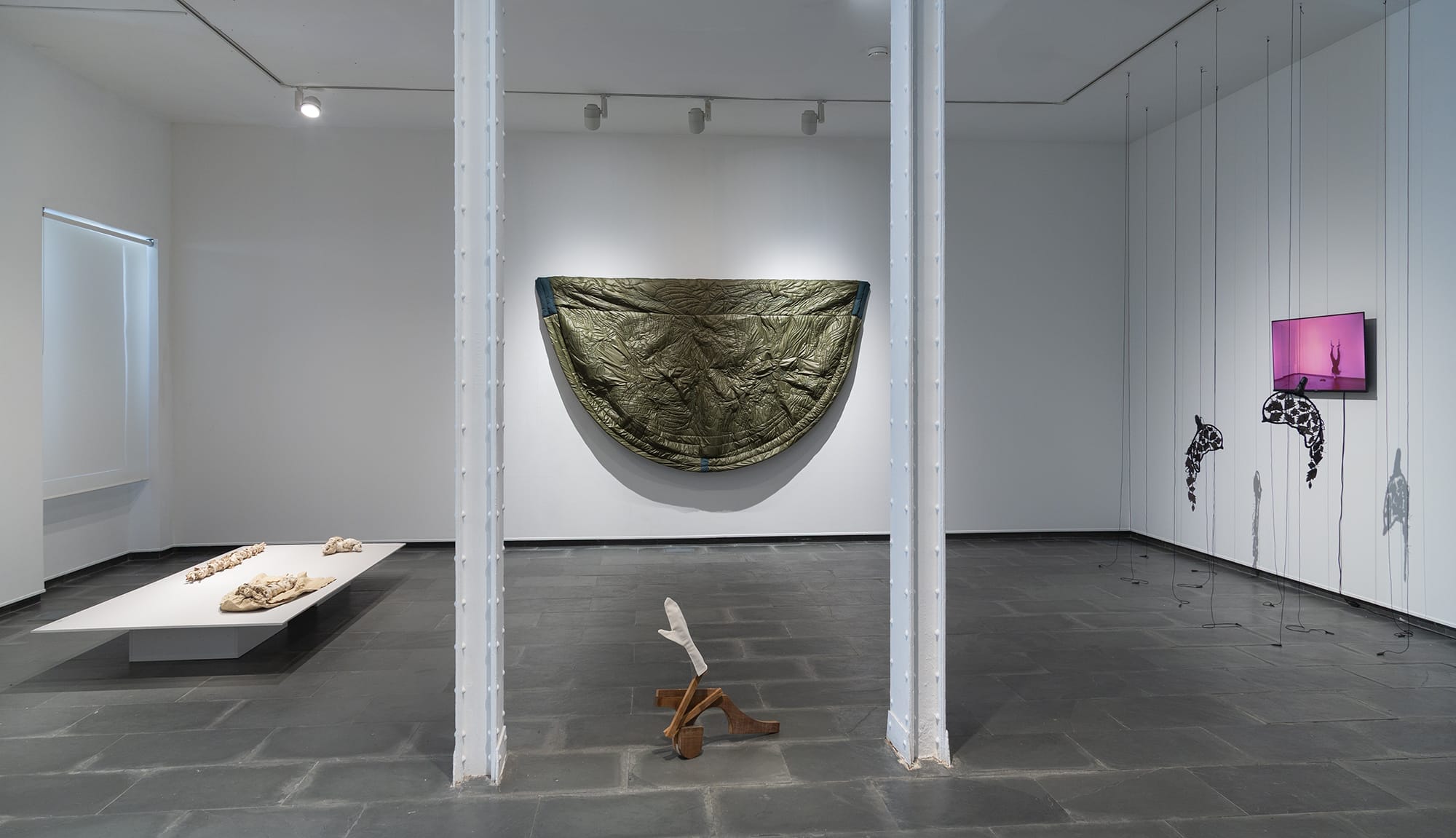
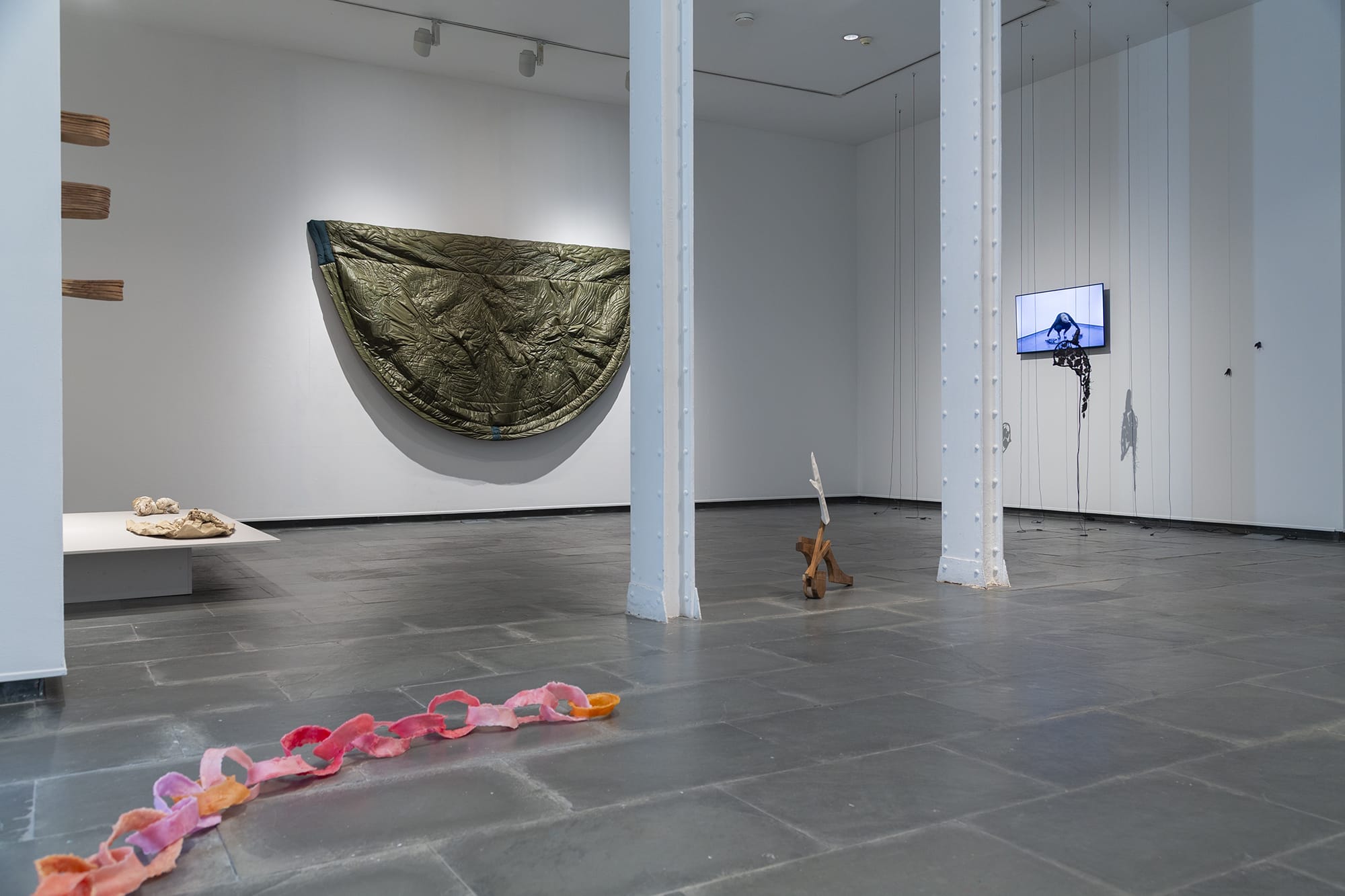
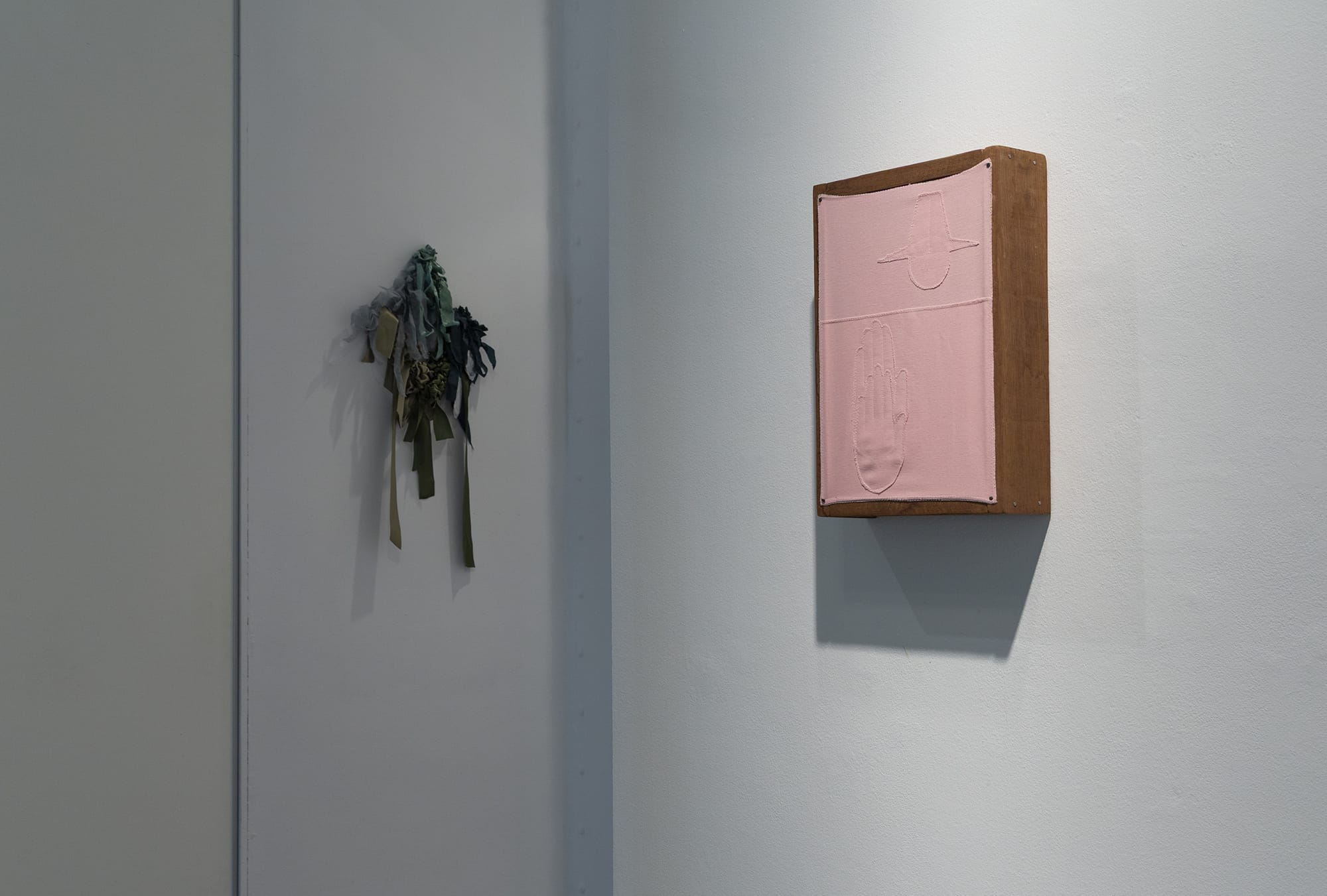
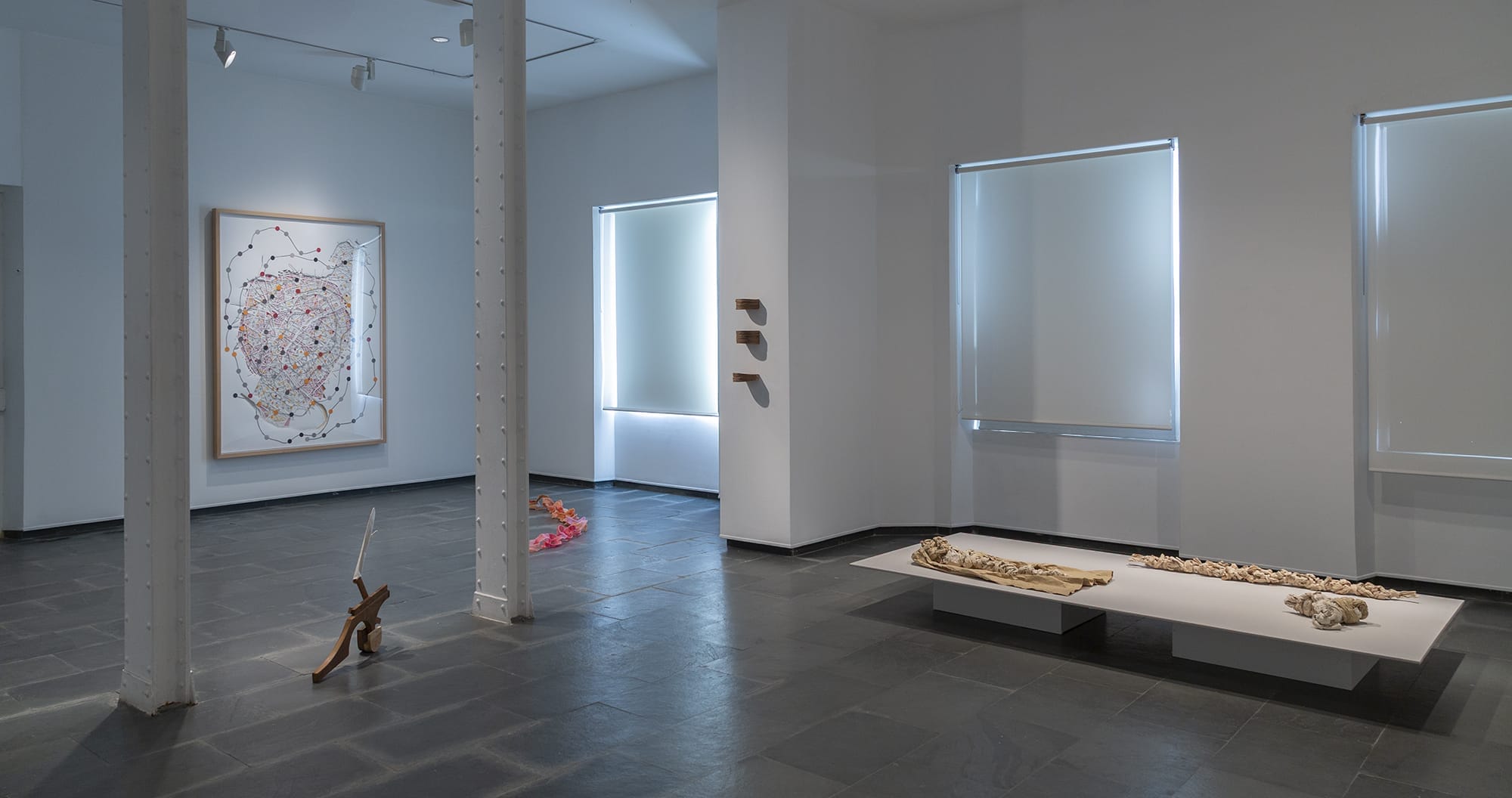
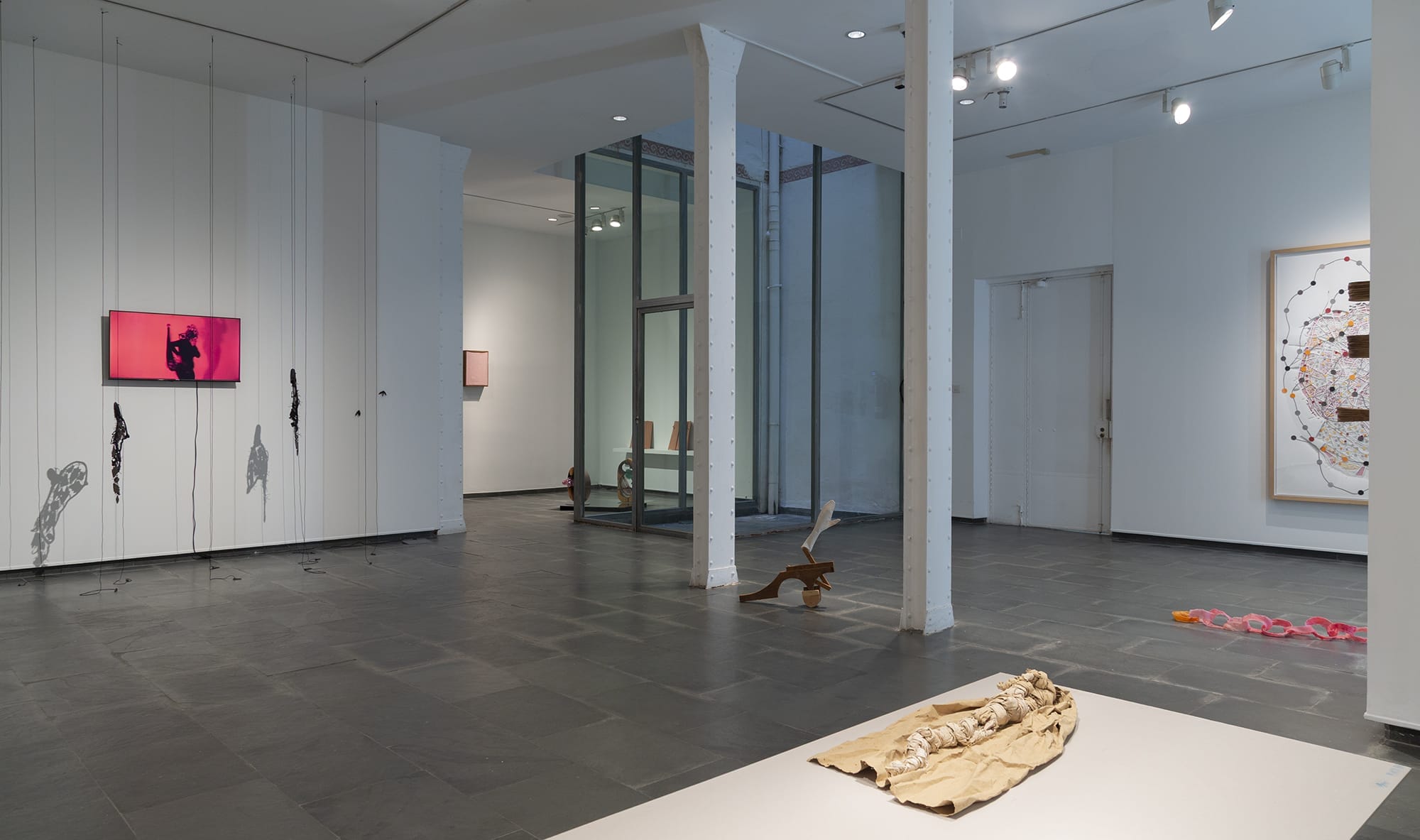
In the context of a world dominated by the instantaneousness, the here-and-now and mass production the inclusion of handicrafts and their techniques in contemporary is a reality, even, one might say, a form of resistance and also an exercise in thinking. The artists in this exhibition, Maria Alcaide, Natalia Castañeda, Ariamna Contino & Alex Hernández, Paloma de la Cruz, Fuentesal Arenillas, Paula Garcia-Masedo and Leonor Serrano Rivas regard their skills as being a political language, a way of knowledge and a new vernacular.
Historically relegated to the realm of domesticity, women or the utilitarian, handicrafts have been reclassified by these creators as a corporal and material concept. Weaving, embroidering or modeling are actions that imply memory and experience, knowledge that goes beyond the traditional categories of the skills. The artists discard the instruction manual to imitate the old and salvage it as a contemporary gesture that sets in motion new narratives, new languages on the commonplace, identity, movement and territory.
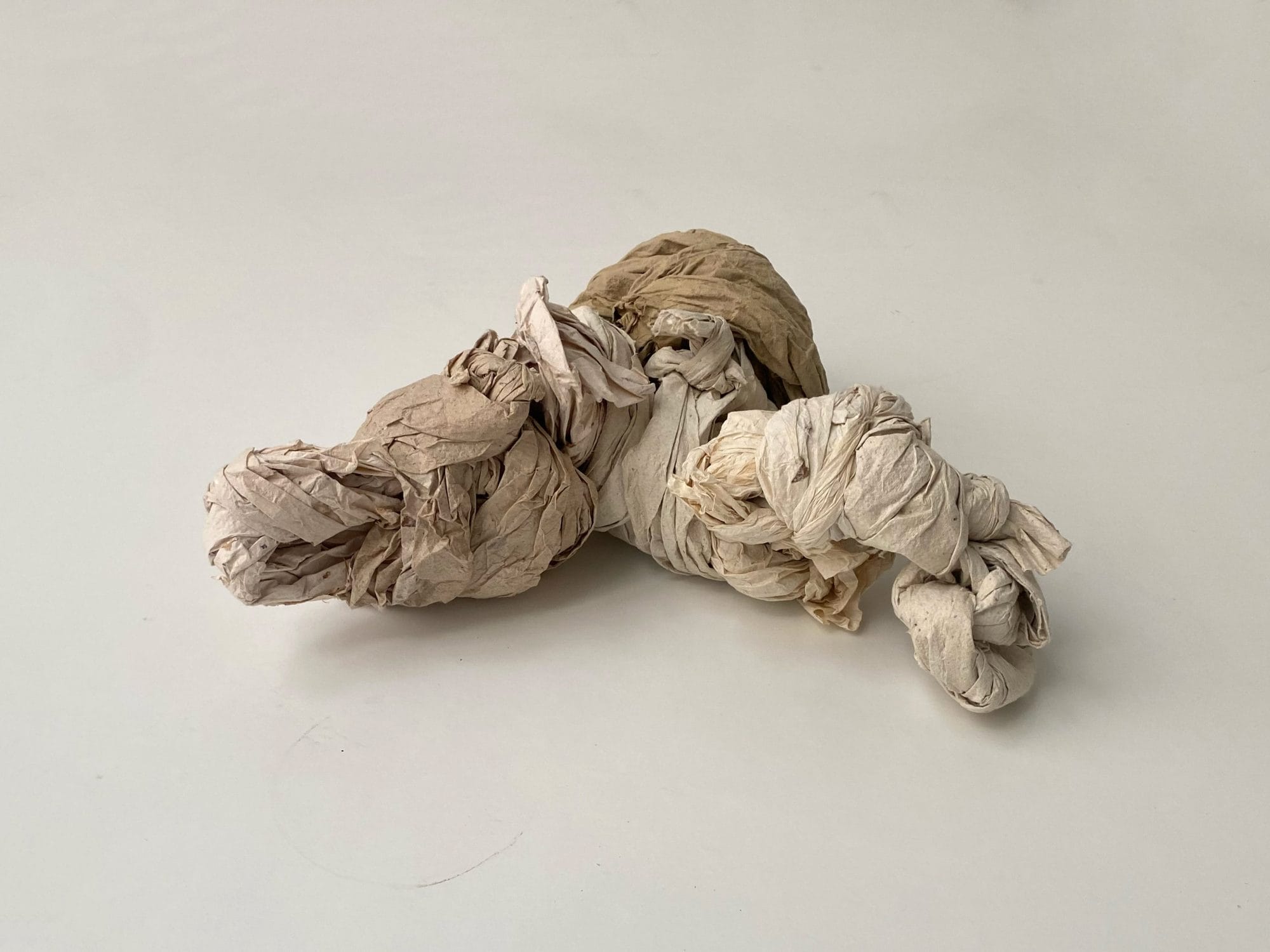
Paula García-Masedo centres her work El Lugar de las Fuerzas on humble materials and the invisible expertise of handwork. Her interest in the common-place and fragility leads her to use linen and plants to make handcrafted paper, questioning the hierarchy between art and craft. Allowed to repose the result is treated and modelled by hand to bring to life a force that connects with the land.
Leonor Serrano Rivas explores ancestral choreographies. Movements are transformed by shaping and are resistent to disappearance. By linking art, architecture and performance the crafts become a living record of bodily knowledge where the technique also forms part of memory and chronicle. Her poetics reactivate the ritual dimension of handwork where every gesture becomes a dance and a story. The outer casing of Carcasa’s contents might also be understood as a receptacle that covers and projects the interior, underlining the relation between exterior and interior.
Fuentesal Arenillas propose an expanded craft based on experiment, playing and error. Their sculptures and installations using fabrics are brought to life through the inseparable processes of thinking and making. In their work the material converses with the body, it resists and is obliged to improvise, revealing the craftsmanship to be a live and open process, closer to exploration than controlled technique.
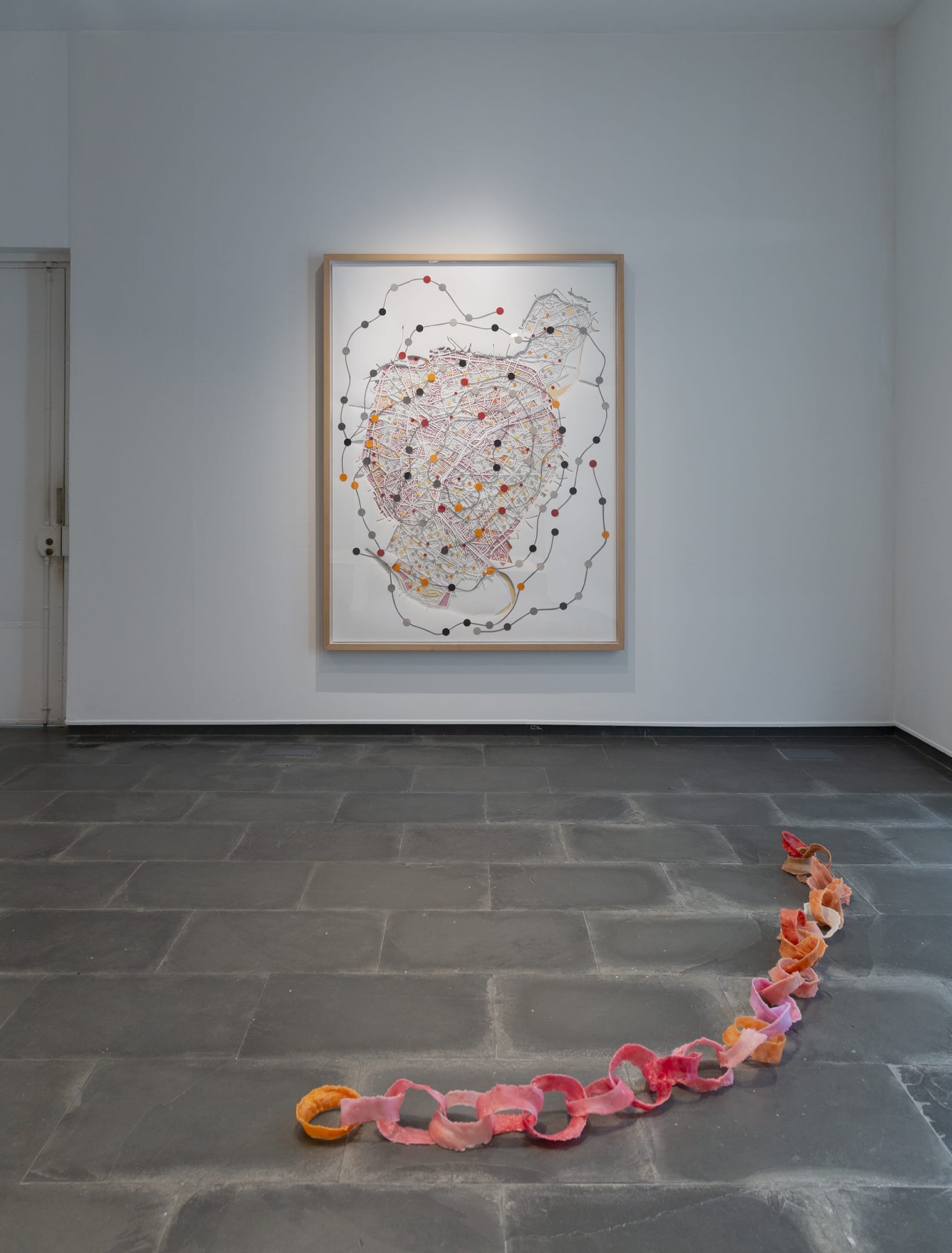
Ariamna Contino & Alex Hernández´s work of paper cutouts functions like an embroidery and an instrument of social map-making. Statistics play a decisive role. They transport scientific elements to the world of art, transforming data and problems in images that reveal the hidden numbers. Work evolves from the idea of the seasons and handcrafts become political by converting them into a tool of criticism and collective memory in contrast to the abstract character of the official discourse.
Paloma de la Cruz approaches ceramics with caring familiarity. Her works, constructed by stitching together ceramic pieces, behave like a sensitive genealogy in which feminine memory, affections and territories are intertwined, representing bonding and restoration.
María Alcaide uses irony present her craft. Instead of idealising her skill, she converts it into a critical device that questions the hierarchies of art and work. Her textile pieces address the precariousness of the work place and the feminisation of occupations. La Romería de los Cornudos, begins with a ballet by Garcìa Lorca and the reading of a pilgrimage around the Doñana park area. It broaches socio-economic, environmental and spiritual problems, exhibiting the handicraft as a space of conflict rather than harmony: the exploitation of natural resources and of labour. In the same way, the piece belonging to Cuerpo de Trabajo becomes a reference to the representation of work in folklore, of which flamenco is the prime example.
Finally, Natalia Castañeda explores in Sentires the relation between body, earth and landscape through pottery and ceramics. She considers her craft a dialogue with the territory: shaping or eroding of the material is to listen to the geology and its ponderous movement. In her «hand-made landscapes» the hand-print merges with the time-print, emphasising the connection between human and nature.
Together, these artists expand the notion of the crafts towards political, social and sensorial fields. García-Masedo proclaims the handcraft of the common-place; Serrano Rivas bodily, memory; Fuentesal Arenillas, playful experiments; Contino & Alex Hernández, social criticism; De la Cruz, caring and genealogy; Alcaide, irony and condemnation; and Castañeda, listening to the land.
Handicrafts are no longer merely a marginal technique and become a leading actor in the contemporary art world. A vindication by these handicraft artists of the handwork as a purpose and a moral code where every gesture of the hand is also an movement of memory and resistance.
Alicia Ventura
Exhibition views
Works
Capa pluvial o Manto para caballo, 2025
Cotton, polyester, wadding, horse sweat, human sweat
300 × 180 × 5 cm
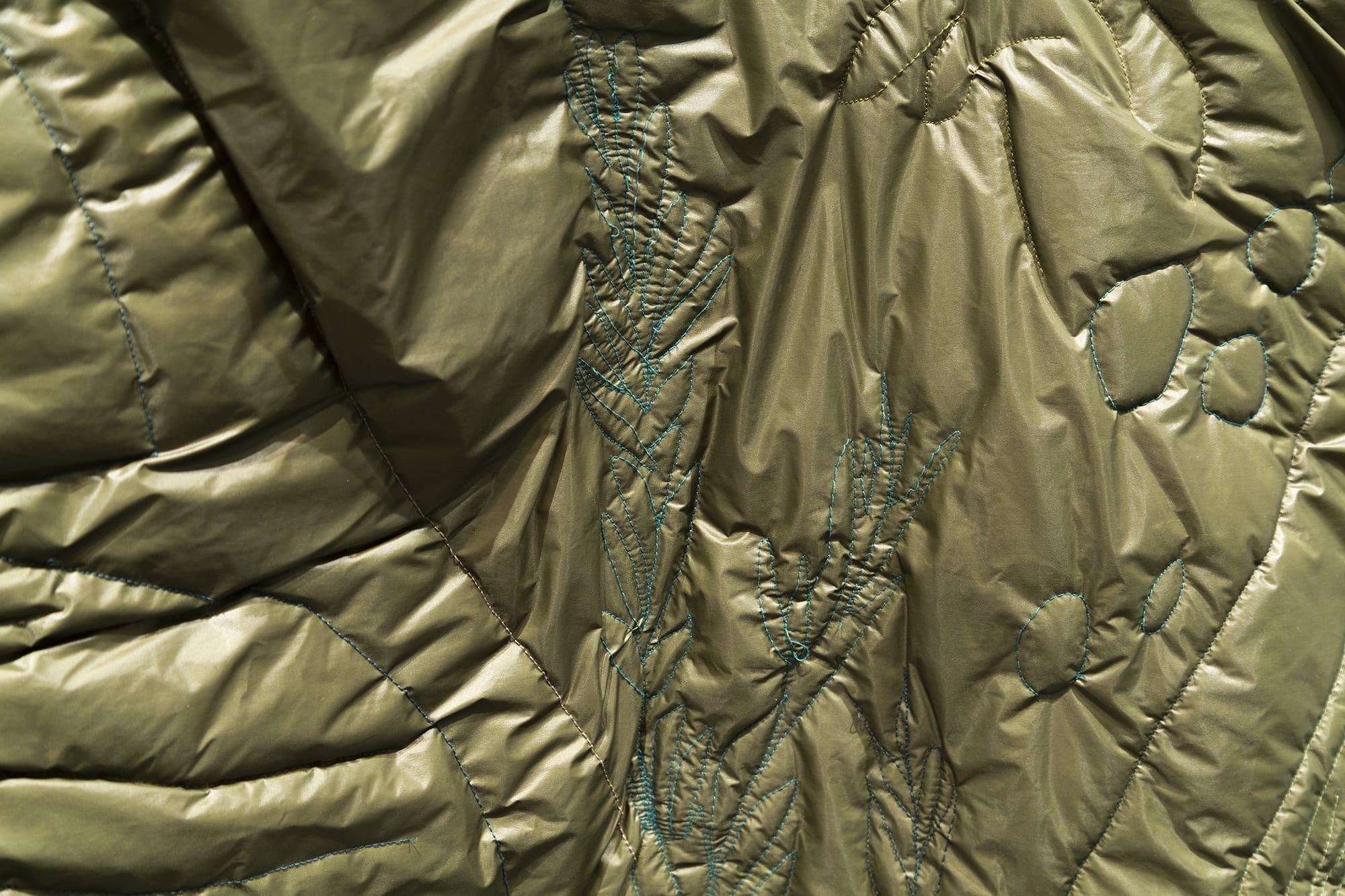
Capa pluvial o Manto para caballo, 2025. Detail
Cotton, polyester, wadding, horse sweat, human sweat
300 × 180 × 5 cm
Cadena de gargantas, 2022
Colored dental wax
25 x 25 x 240 cm
Cadena de gargantas, 2022. Detail
Colored dental wax
25 x 25 x 240 cm
Exvoto IV, 2025
Cotton, polyester, shells
60 × 35 × 5 cm
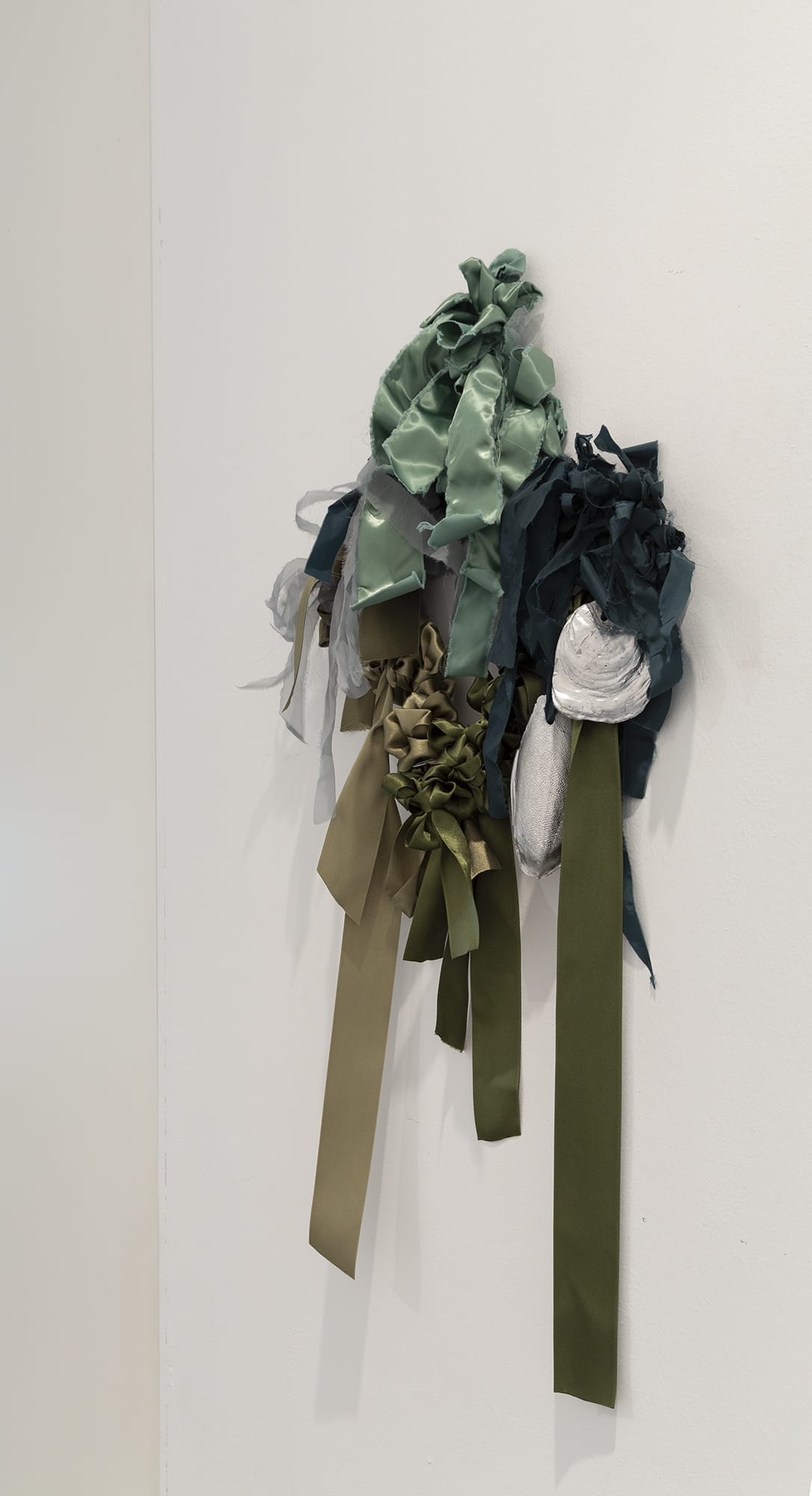
Exvoto IV, 2025
Cotton, polyester, shells
60 × 35 × 5 cm
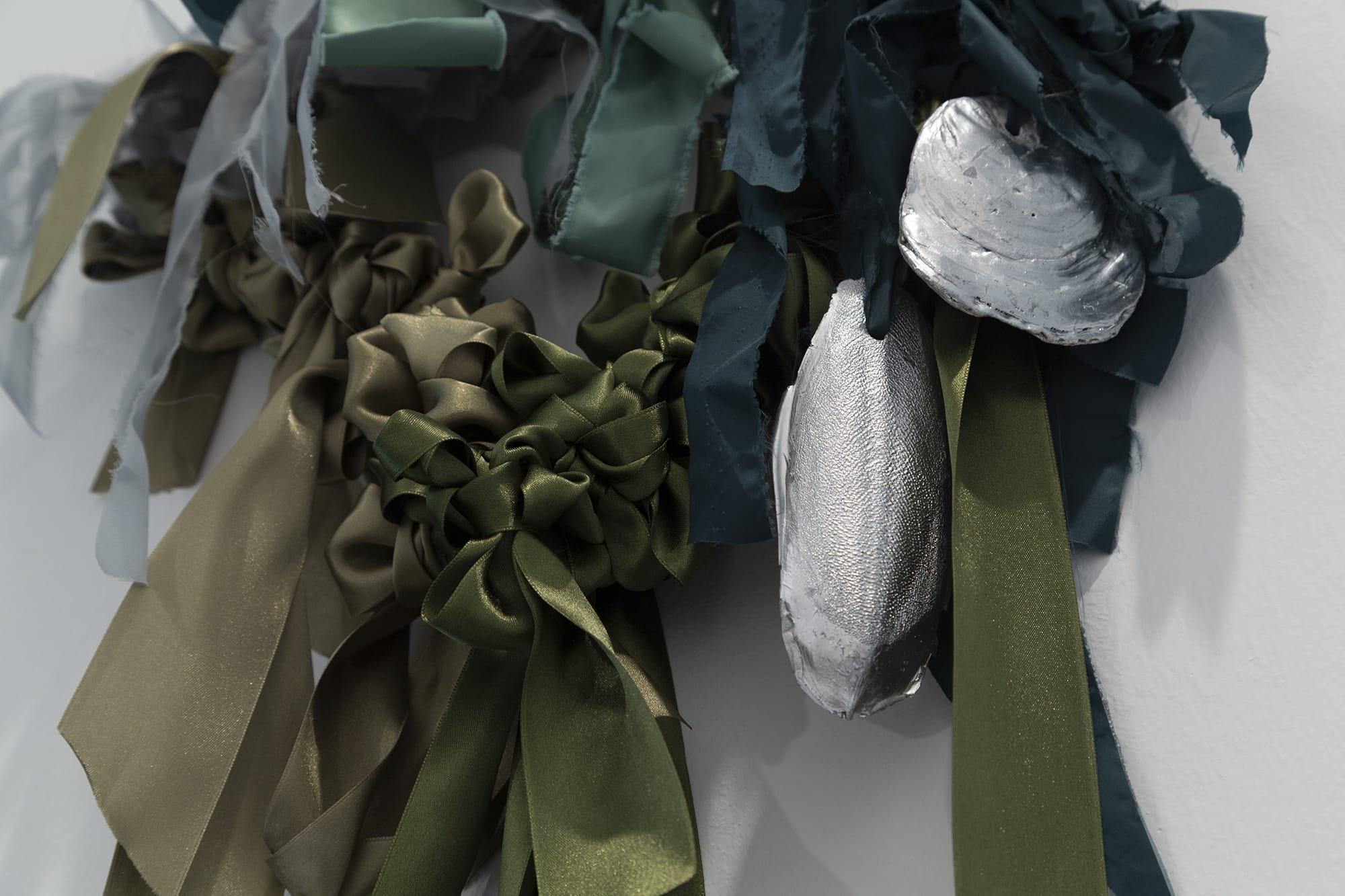
Exvoto IV, 2025. Detail
Cotton, polyester, shells
60 × 35 × 5 cm
Sentires, 2020
Ceramics
39 x 20 x 6 cm
Sentires, 2020. Detail
Ceramics
39 x 20 x 6 cm
Sentires, 2020. Detail
Ceramics
39 x 20 x 6 cm
Sentires, 2020. Detail
Ceramics
39 x 20 x 6 cm
Danza para el murciélago que quiso ser abanico, 2025
Installation and video
Variable dimensions
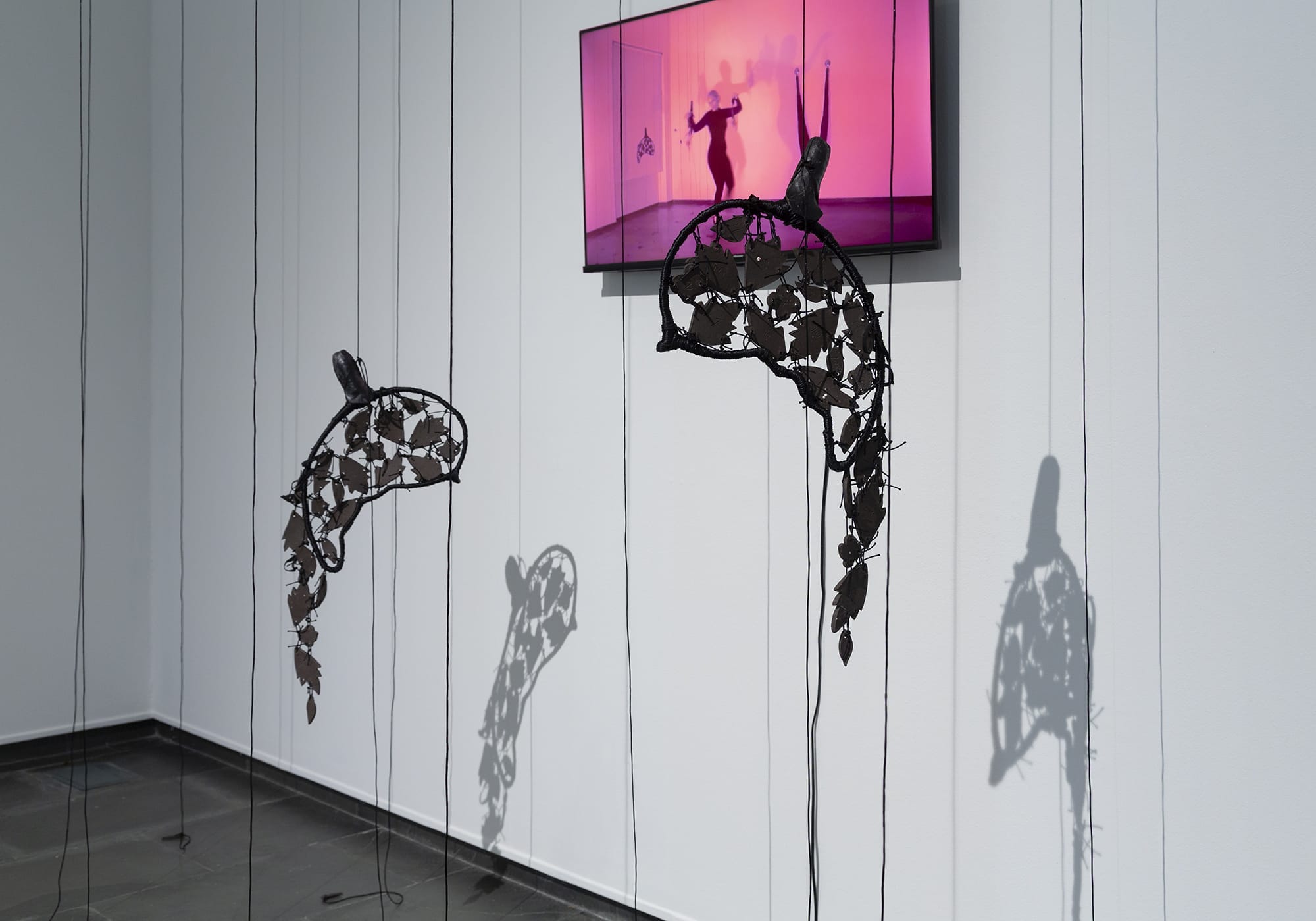
Danza para el murciélago que quiso ser abanico, 2025
Installation
Mixed media
Variable dimensions
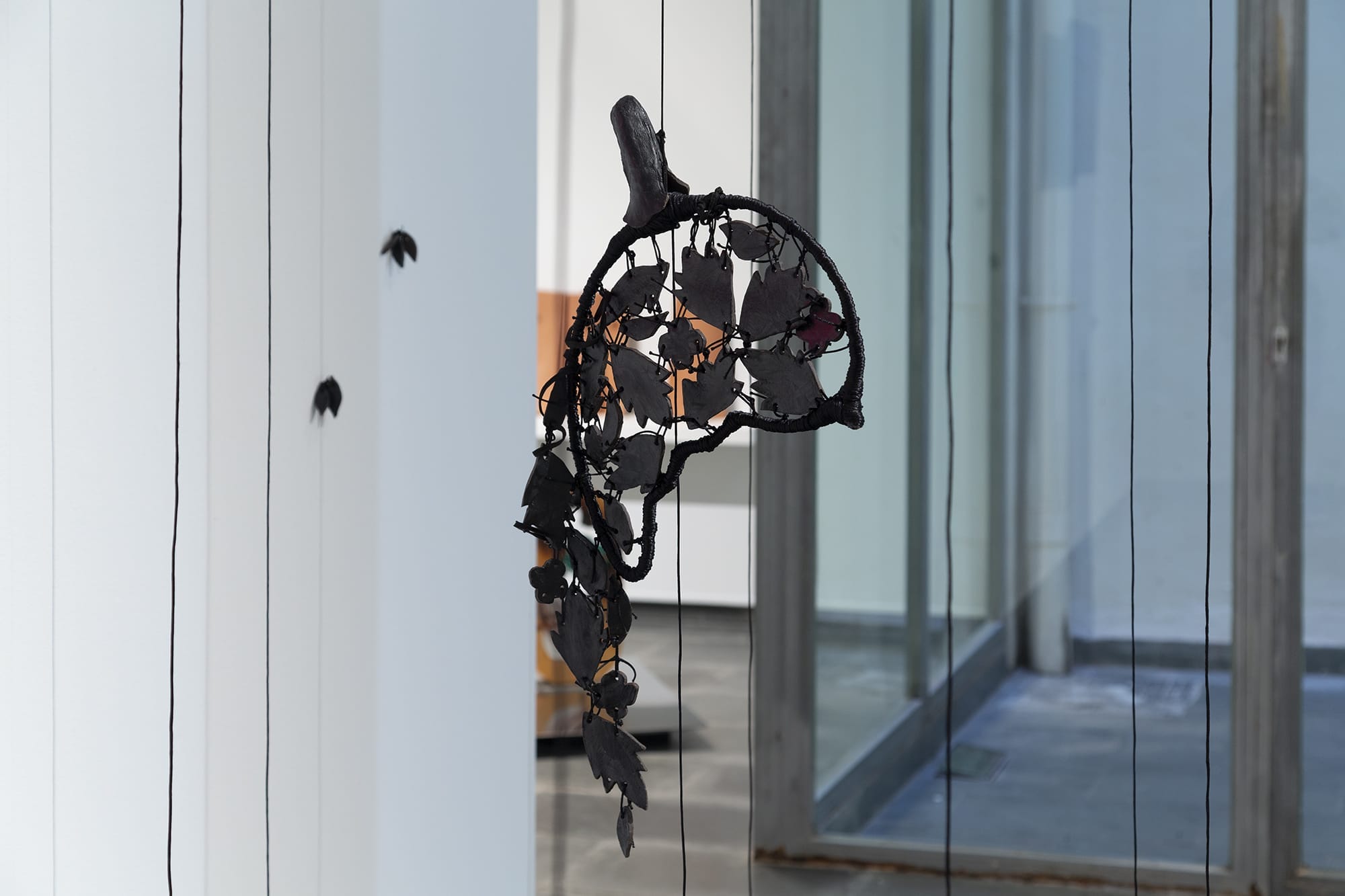
Danza para el murciélago que quiso ser abanico, 2025. Detail
Installation
Mixed media
Variable dimensions
Danza para el murciélago que quiso ser abanico, 2025. Detail
Installation
Mixed media
Variable dimensions
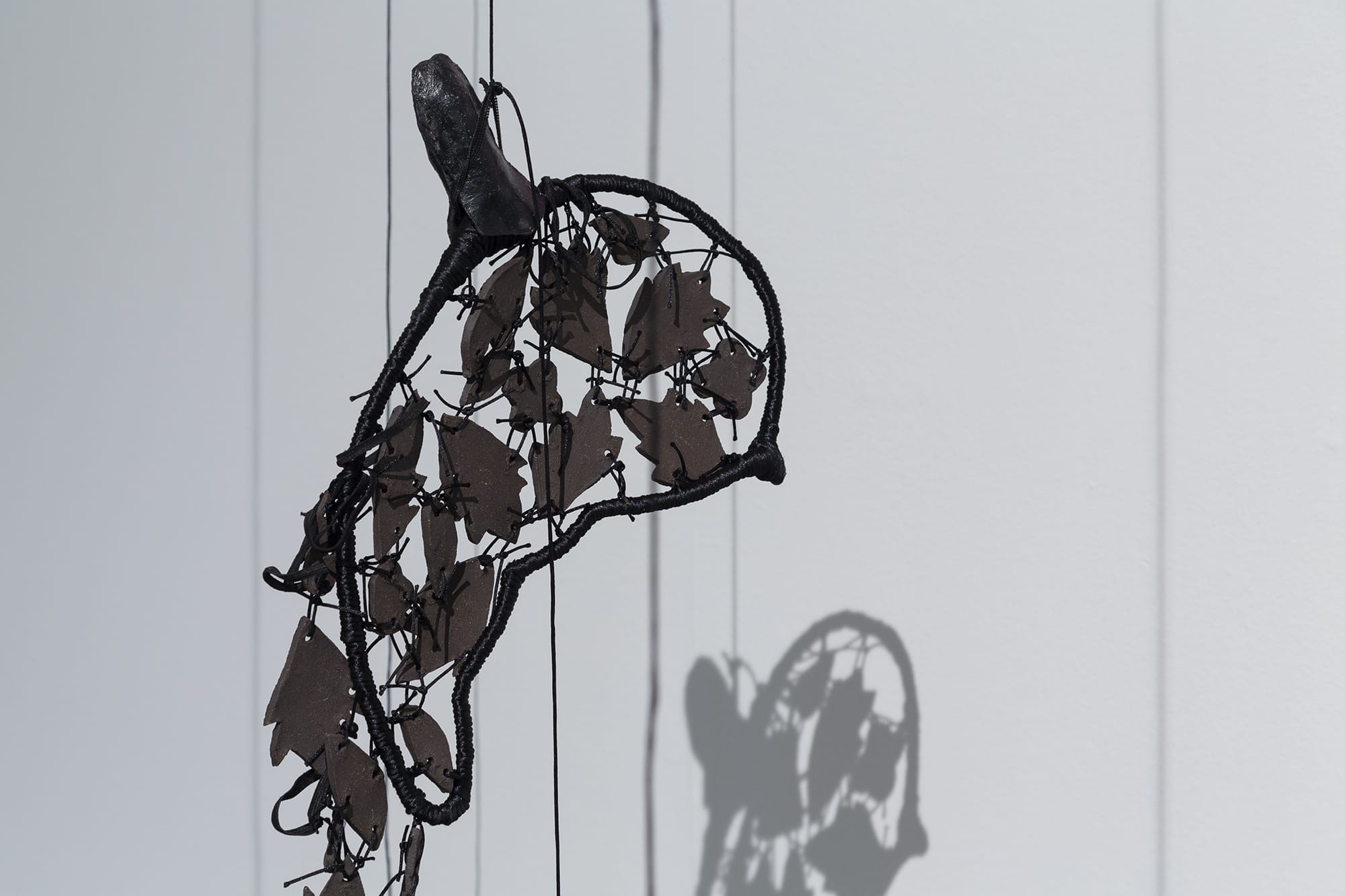
Danza para el murciélago que quiso ser abanico, 2025. Detail
Installation
Mixed media
Variable dimensions
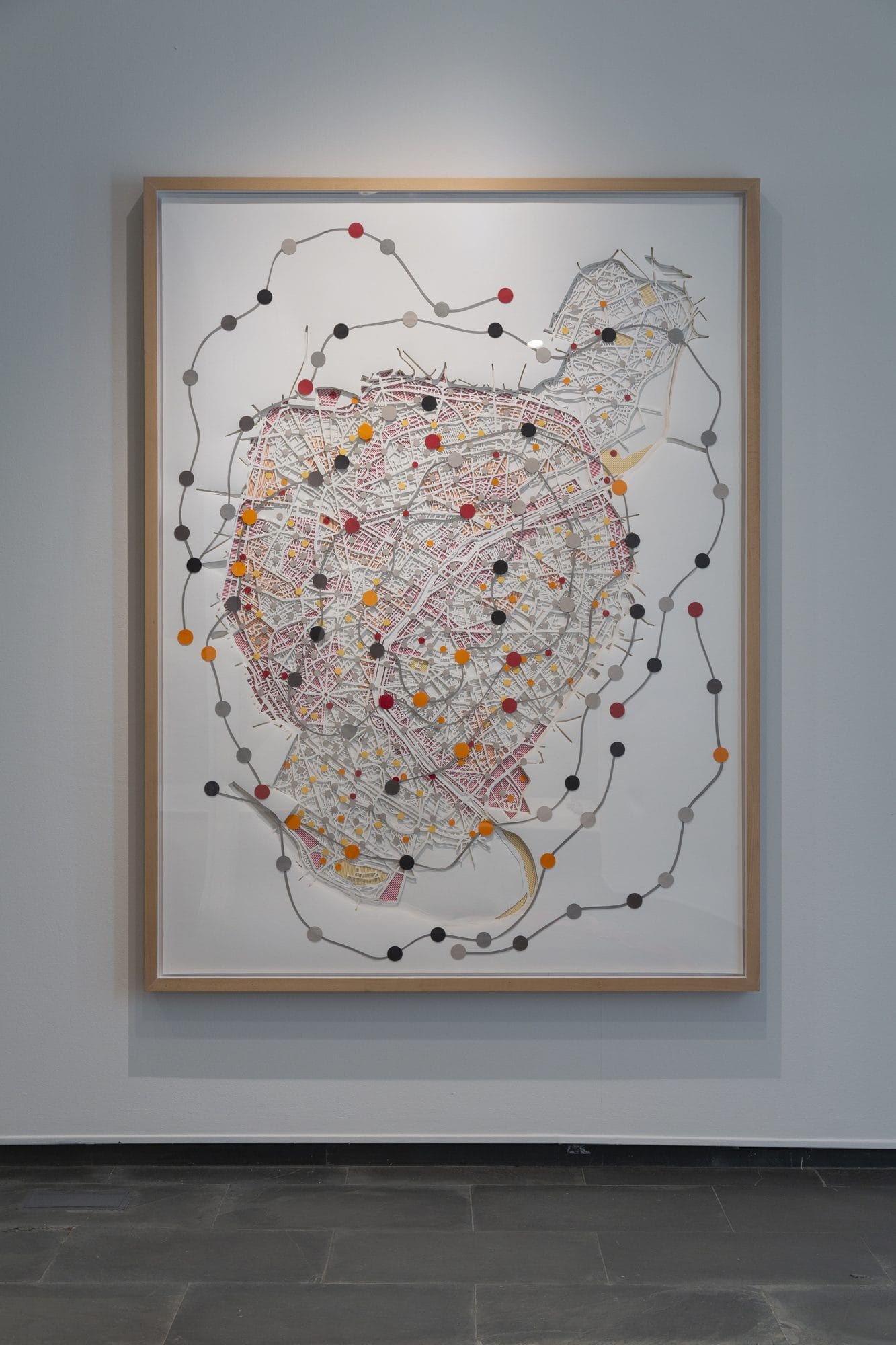
Cartografía total. Contaminación del aire en París, 2024
hand-cut paper / Canson Montval Cardboard 300 g acid free
156 x 206 x 7 cm
Cartografía total. Contaminación del aire en París, 2024. Detail
hand-cut paper / Canson Montval Cardboard 300 g acid free
156 x 206 x 7 cm
Cartografía total. Contaminación del aire en París, 2024. Detail
hand-cut paper / Canson Montval Cardboard 300 g acid free
156 x 206 x 7 cm
Viña IV, 2022
Iroko wood, canvas and nails
48 x 34 x 10 cm
Viña IV, 2022. Detail
Iroko wood, canvas and nails
48 x 34 x 10 cm
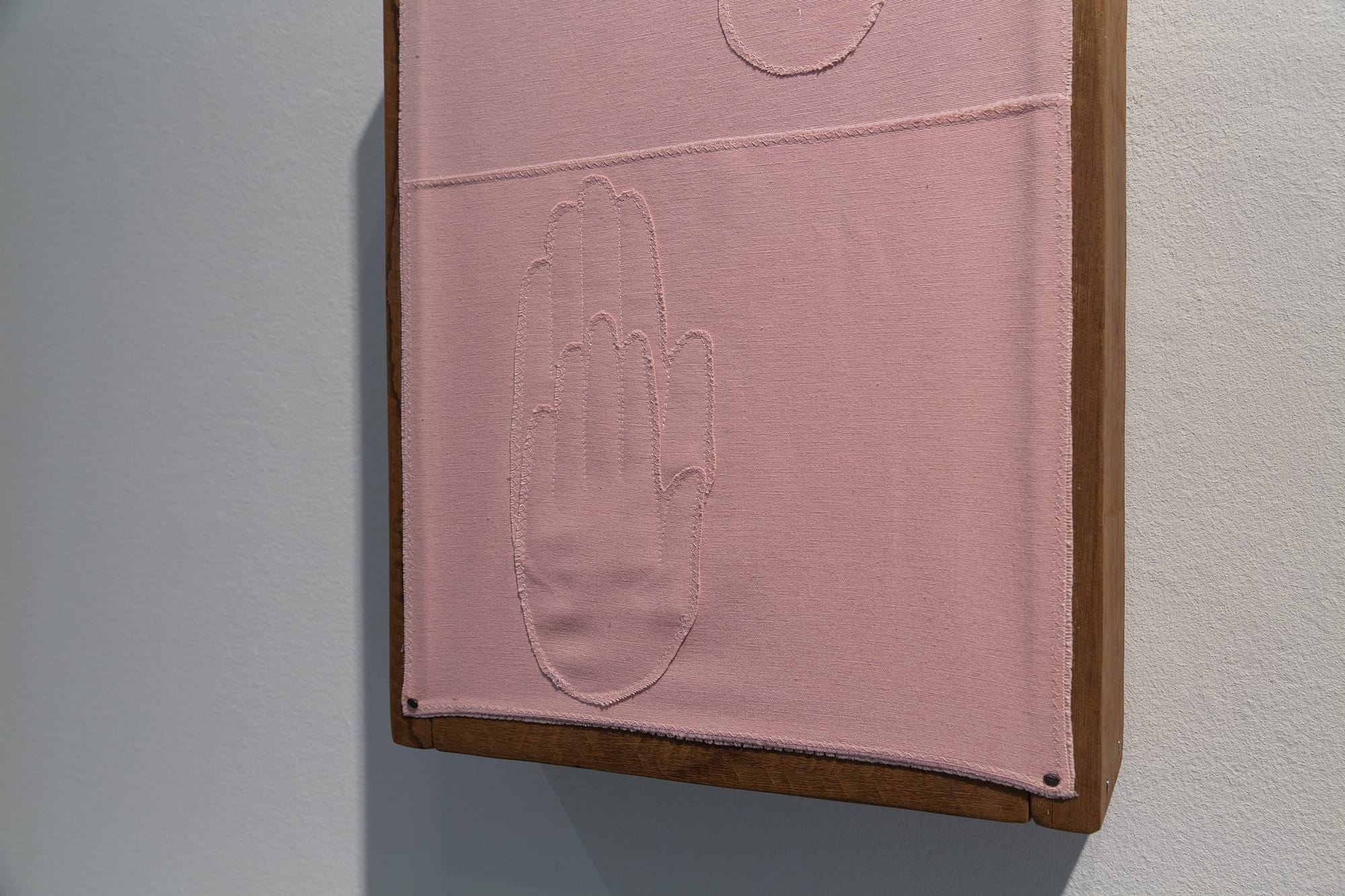
Viña IV, 2022. Detail
Iroko wood, canvas and nails
48 x 34 x 10 cm
Alimentar la tierra, 2022. Detail
Iroko wood, sapelly, Flanders pine, canvas
75 x 15 x 70 cm
Alimentar la tierra, 2022 Detail
Iroko wood, sapelly, Flanders pine, canvas
75 x 15 x 70 cm
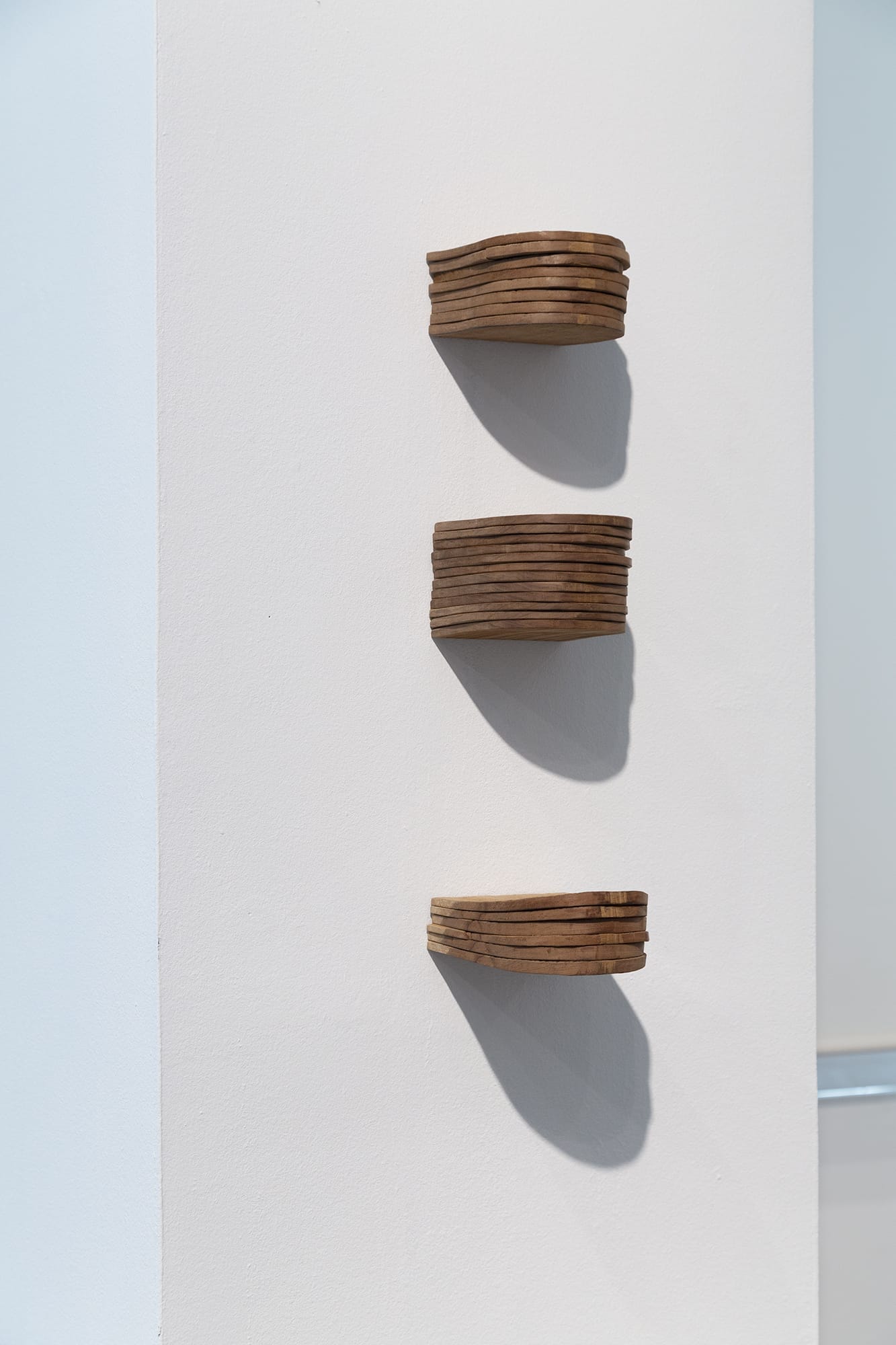
Bóveda II, Bóveda III, Bóveda I, 2024
Chesnut wood
8 x 13 x 14 cm, 10 x 13 x 14 cm, 7 x 13 x 17 cm
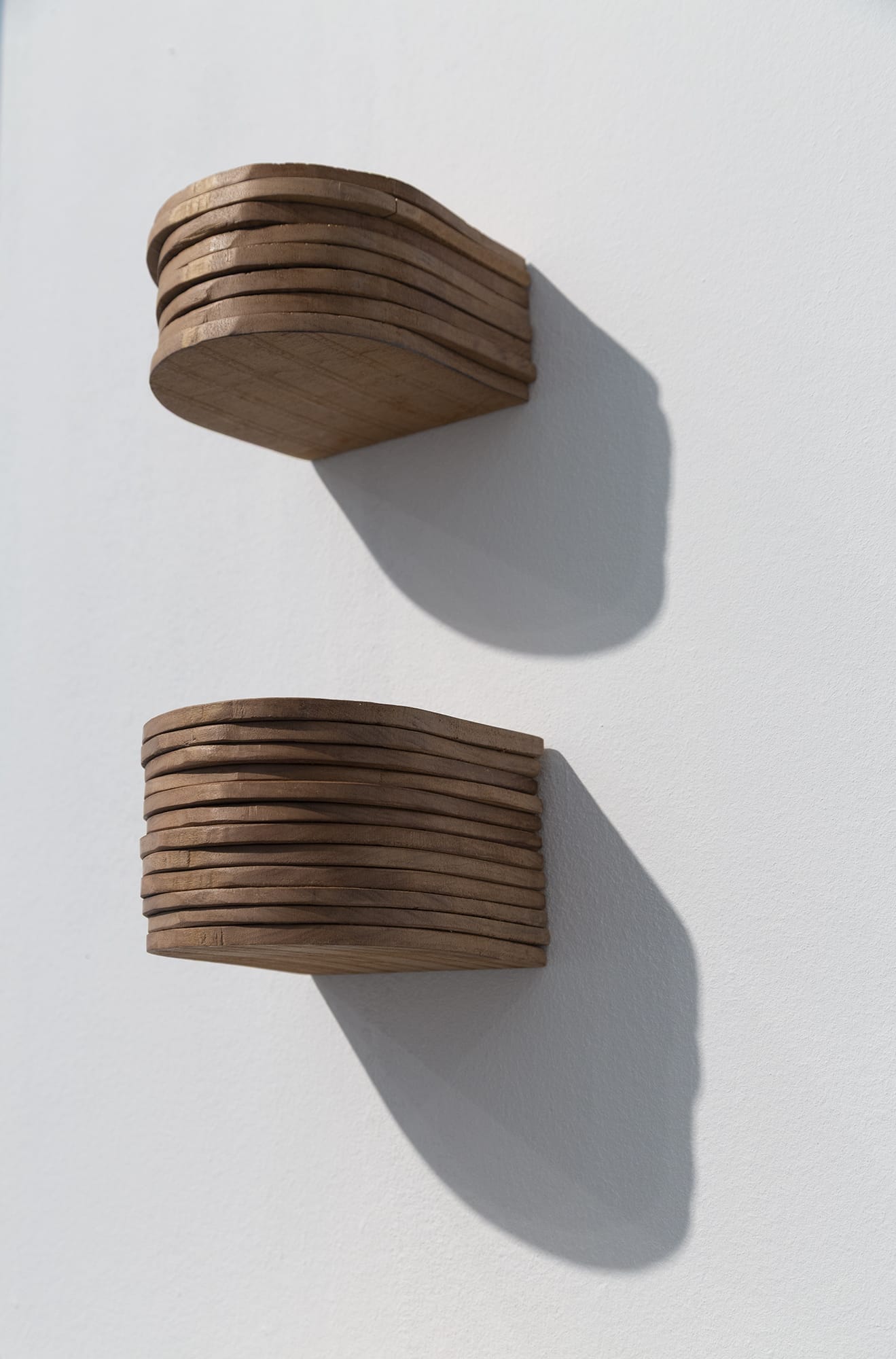
Bóveda II, Bóveda III, 2024
Chesnut wood
8 x 13 x 14 cm, 7 x 13 x 17 cm
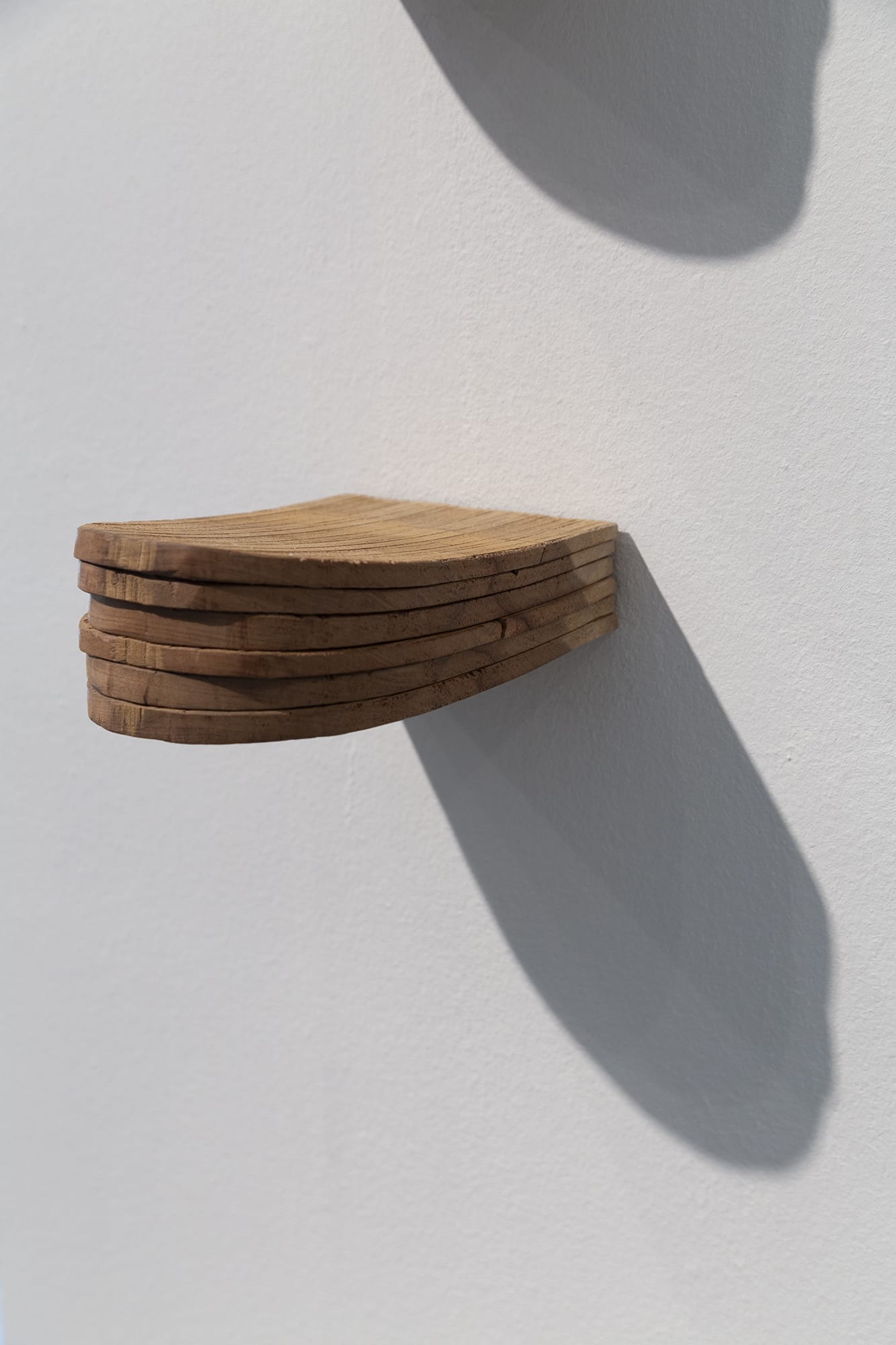
Bóveda I, 2024
chesnut wood
7 x 13 x 17 cm
El lugar de las fuerzas, 2024
Linen and plants
Different measures
Vértebra, horcajo, 2024
Linen and plants
10 x 25 x 30 cm
Photo Paula García-Masedo
Vértebra, maíllo, 2024
Linen and plants
10 x 124 x 18 cm
Photo Jorge Mirón
Rebollar II, 2024
Linen and plants
14 x 96 x 53 cm
Photo Jorge Mirón
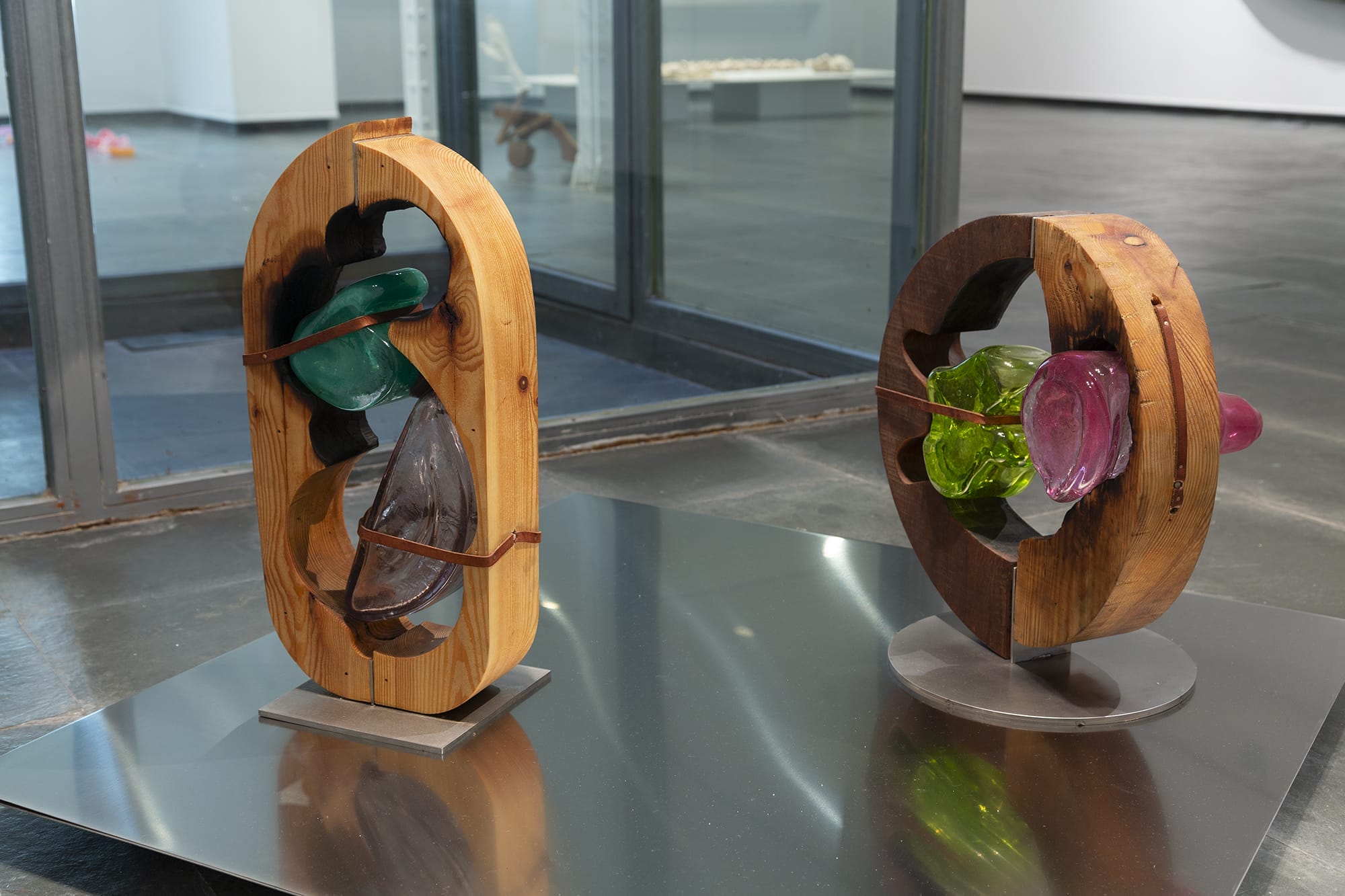
Carcasa nº3, Carcasa nº 2, 2024
Blown glass, wood, leather and metal
54´5 x 25 x 20 cm, 46 x 44 x 30 cm
Carcasa nº 2, 2024
Blown glass, wood, leather and metal
46 x 44 x 30 cm
Carcasa nº 2, 2024. Detail
Blown glass, wood, leather and metal
46 x 44 x 30 cm
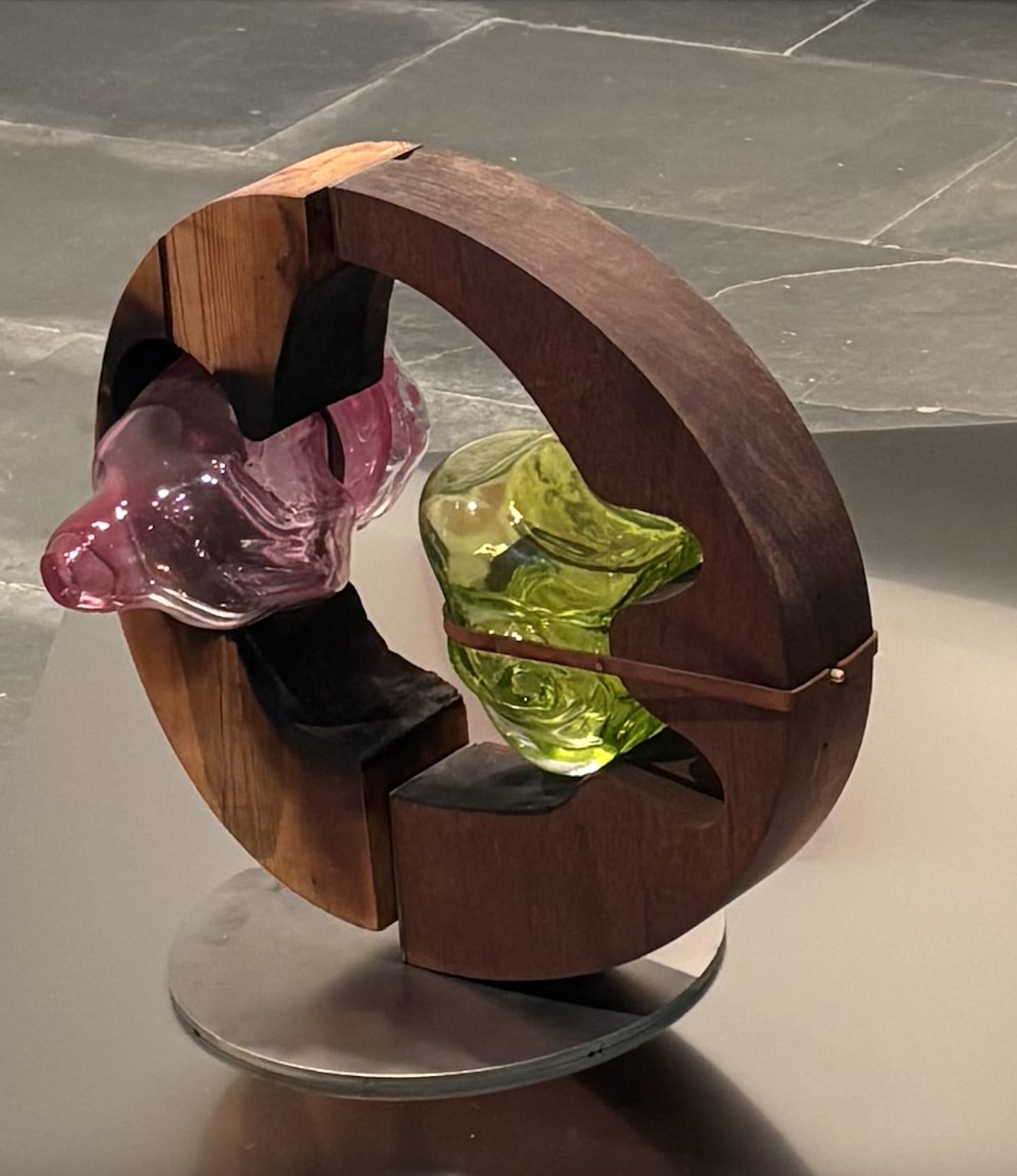
Carcasa nº 2, 2024.
Blown glass, wood, leather and metal
46 x 44 x 30 cm
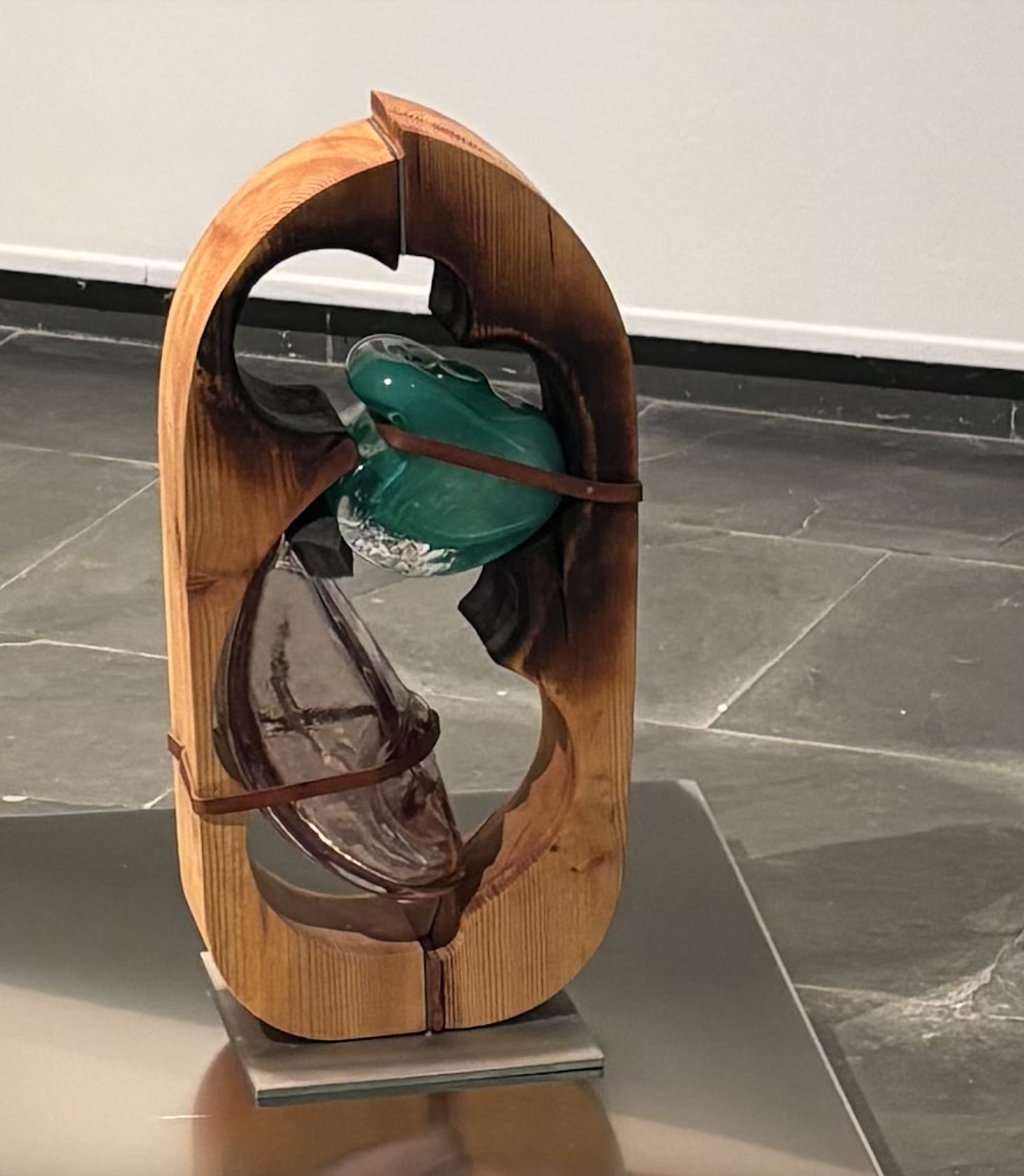
Carcasa nº 3, 2024
Blown glass, wood, leather and metal
54´5 x 25 x 20 cm
Carcasa nº 3, 2024.
Blown glass, wood, leather and metal
54´5 x 25 x 20 cm
Download 


